Nazi Ratlines
The Disappearance of Josef MengeleThe Nazi Ratlines were more than secret routes out of Europe: they were coordinated networks of officials, intermediaries, institutions, and sympathizers that helped former Nazis and collaborators escape prosecution and establish new lives abroad. In the book, their importance lies both in their organization under Juan Perón’s government and in the durable relationships that continued to shelter fugitives as international efforts to pursue them gathered force.
Organization and State Sponsorship
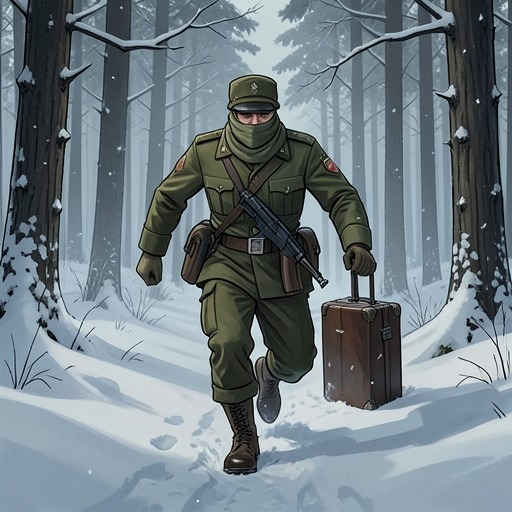
Juan Perón personally oversaw Argentina’s escape operation and established an Information Office in Buenos Aires, headed by Rudi Freude. Freude was the son of Ludwig Freude, a wealthy Nazi banker and shareholder in Dürer Publishing who had been a principal backer of Perón’s successful 1946 presidential campaign. Perón sent former SS captain Carlos Fuldner first to Spain, then Switzerland, and finally to Rome and Genoa, where Gregor had embarked. Fuldner and Freude helped coordinate the ratlines: chains involving diplomats, corrupt officials, intelligence operatives, and clergy who assisted war criminals in leaving Europe and acquiring a measure of protection.
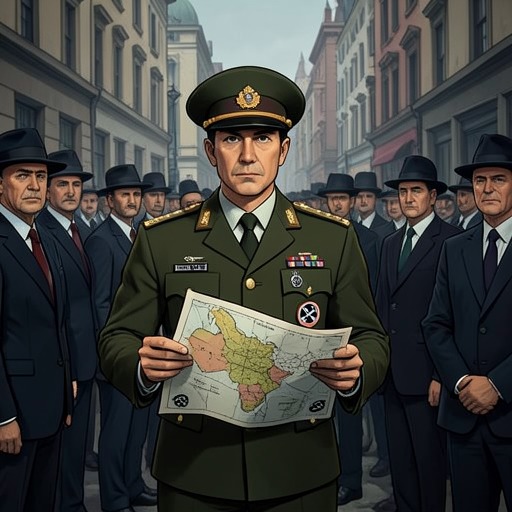
This effort was tied to Perón’s larger ambition to recruit German and other European personnel for Argentina. The country welcomed thousands of Nazis, Fascists, and collaborators, including military figures, engineers, scientists, technicians, and doctors, whose skills were expected to contribute to projects such as dams, missiles, and nuclear power plants. The book presents the escape system as both a refuge for wanted men and part of a political project shaped by the coming struggle against communism.
Buenos Aires as a Refuge and Social Network
By the late 1940s, Buenos Aires had become a gathering place for exiles from the defeated Black Order and other authoritarian movements. Its community included Ustaše Croatian counter-revolutionaries, Serbian ultra-nationalists, Italian Fascists, members of the Arrow Cross Party, and other European far-right groups. The account depicts not a single organization controlling every fugitive’s fate, but a setting where overlapping political loyalties, introductions, and social ties could provide access to shelter and influence.
A December gathering aboard the Falken illustrates how these connections operated socially. Sassen brought Gregor to the vessel after they gave a password and were searched at the quay. There, Sassen pointed out senior and notorious figures among the guests, including Ante Pavelić, and said that Uli Rudel was also on his way. The scene places the escapees within a wider expatriate milieu in which former political and military elites could meet, exchange contacts, and maintain a sense of community.
That network extended into private homes. After meeting Gerard Malbranc aboard the Falken, Gregor moved into his villa. Malbranc, a former Nazi spy and wartime arms dealer, was described as a pillar of Nazi society in Buenos Aires. His visitors included former officials and prominent exiles; Eberhard Fritsch and Sassen came to play poker, and the architect Frederico Haase was among the people drawn into Gregor’s circle. Such domestic gatherings made the refuge more than a point of arrival: they offered relationships through which a fugitive could find accommodation, companionship, and further connections.
In July 1949, Perón extended amnesty to people who had entered Argentina under false identities and sometimes received them at Casa Rosada. The state’s welcome and the networks operating within the capital reinforced one another: formal tolerance reduced the immediate threat of prosecution, while personal connections helped newcomers negotiate life in exile.
Protection Beyond Argentina
The book follows the same general logic of personal assistance and political protection as Josef Mengele’s circumstances changed. After a prosecutor in Freiburg im Breisgau issued an arrest warrant in February 1959 for multiple cases of premeditated murder and attempted murder, Hans Sedlmeier alerted him. Josef Mengele sold his villa and shares in Fadro Farm, closed his accounts, and prepared to leave Argentina. The possibility that the Argentine government might comply with an extradition request made delay dangerous.
Uli Rudel then helped him seek Paraguayan citizenship, where the absence of an extradition treaty with West Germany offered a potential obstacle to his return. At Rudel’s request, Alban Krug arranged a rural hiding place in the Nueva Bavaria enclave. The citizenship application was illegal because it required five years of residence, but Rudel intervened with Paraguayan officials. In November 1959, Josef Mengele received Paraguayan citizenship, a residence permit, a certificate of good behaviour, and an identity card.
The ensuing extradition process exposed the limits of international cooperation. Requests passed through numerous Argentine offices and legal authorities, while delays and procedural obstacles accumulated. Paraguayan authorities knew an extradition request was approaching, but Rudel pressed the case for naturalization, portraying Josef Mengele as a useful doctor pursued for political reasons. Paraguayan citizenship thus became more than a new identity: it gave the government a stated basis for refusing to surrender him.
Pursuit, Obstruction, and the Ratlines’ Legacy
After Adolf Eichmann was captured in Buenos Aires in 1960, Isser Harel planned a second operation against Josef Mengele. Harel’s information was incomplete: he had heard that Josef Mengele used the name Gregor and ran a furniture factory in central Buenos Aires. The proposed plan depended on acting after Eichmann’s arrest, with nine days available to locate Josef Mengele and bring him to the plane taking Eichmann to Israel. The episode shows how the earlier networks of concealment now confronted intelligence operations designed to cross borders and seize fugitives.
West German efforts remained constrained by procedure and political calculation. In 1962, West Germany requested Josef Mengele’s extradition from Paraguay, but President Stroessner refused to cooperate and invoked the country’s defense of its citizens. The following year, Chancellor Adenauer offered ten million US dollars in aid if Paraguay delivered him; Stroessner rejected the offer. In 1964, West German officials publicly said that Josef Mengele was a Paraguayan citizen who lived near the tri-border region and often traveled to Brazil. Stroessner continued to deny that he was in Paraguay, while resisting what he called foreign interference. A reward announced by Fritz Bauer did not resolve the impasse, and the book describes West Germany’s pursuit as having hit a wall.
The ratlines’ significance therefore persists beyond the initial journey from Europe. The book traces how escape depended on state policy, false identities, private hospitality, political allies, and the capacity of governments to delay or refuse extradition. Decades later, testimony by Auschwitz survivors at the 1985 mock trial in Jerusalem renewed international pressure to capture Josef Mengele, and governments coordinated a new manhunt. By then, the search was also shaped by the public recovery of survivor testimony and the exposure of earlier failures to pursue Nazi criminals. The networks that had helped fugitives disappear had made justice a cross-border problem; their legacy was visible in the long, uneven effort to find those they had sheltered.